
Summary
Mission
The goal was to make sports more interactive, accessible, and rewarding by transforming traditional betting into a seamless, game-driven experience that empowers players, engages communities, and enables operators to scale with confidence.
Business Model: B2C player platform + B2B white-label solution for operators to launch their own branded gaming platforms.
My contribution
I led the end-to-end design of a scalable, white-label sports book platform, designing both the customer-facing web app and operator back office. Working closely with product and marketing. I helped launch multiple operator brands and scale Sports Bozza to over 500,000 registered users.
Discovery
I started with discovery to understand the team’s vision and the plans they had for the product. Two main activities I focused on were competitive analysis and user interviews. The information I gathered helped validate the base set features.
Competitive Analysis
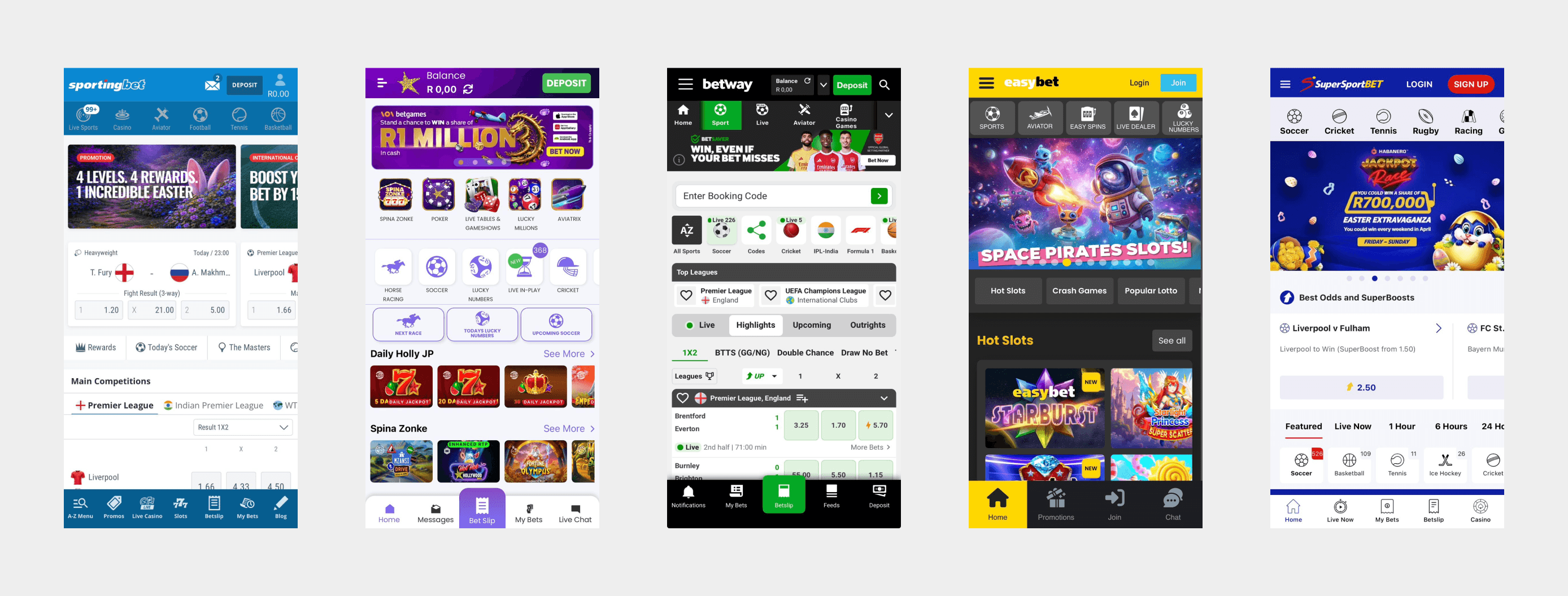
I conducted a competitive analysis of platforms like Hollywoodbets, Sportingbet, Betway, Easybet, and Bet.co.za, reviewing their features and user flows. While they offer robust betting functionality, most experiences are complex and transactional, revealing opportunities to simplify UX and introduce more engaging, game-like interactions.
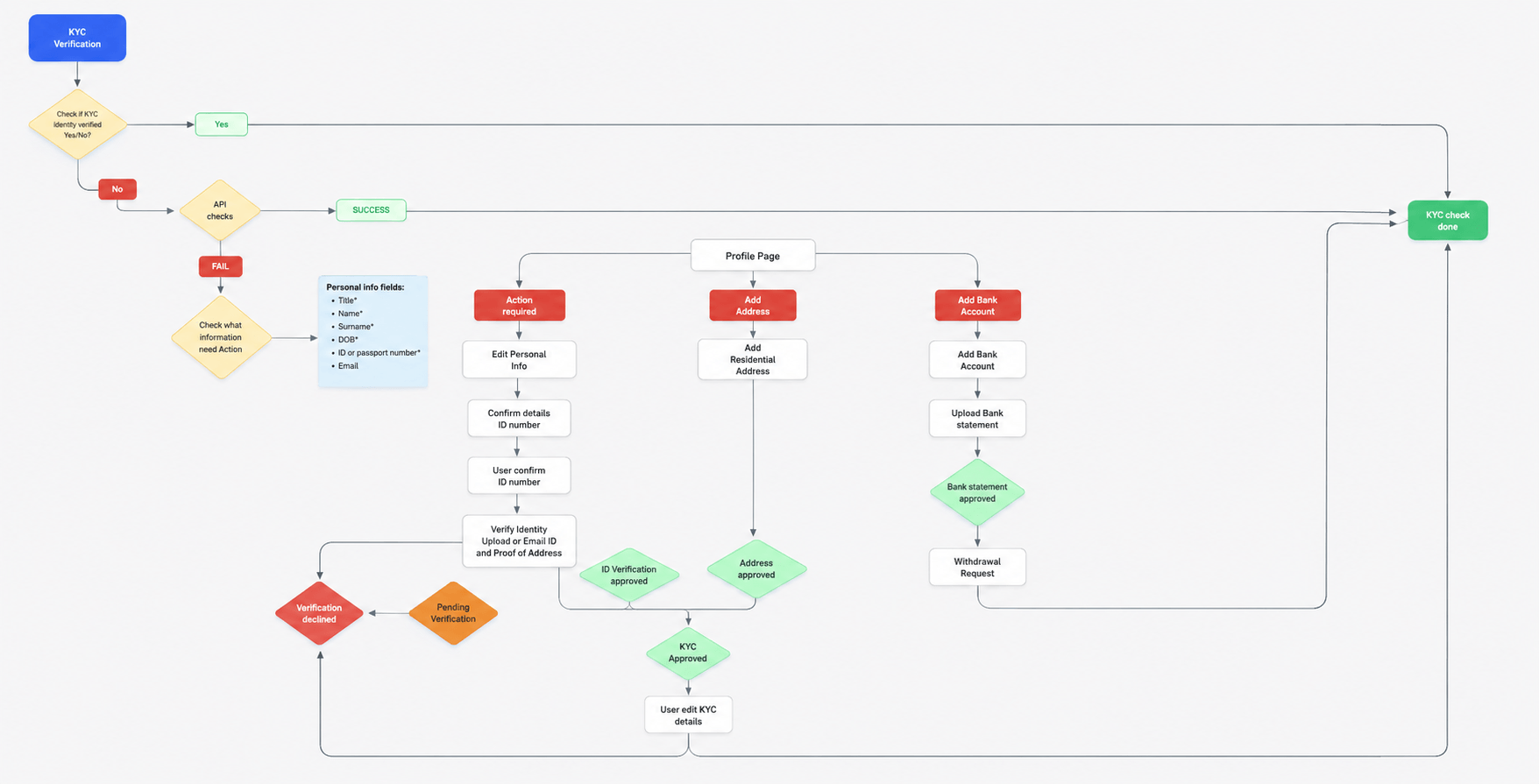
Exploring the flow
I mapped the end-to-end user flow to simplify decision-making, eliminate unnecessary steps, and create a seamless path from entry to task completion.
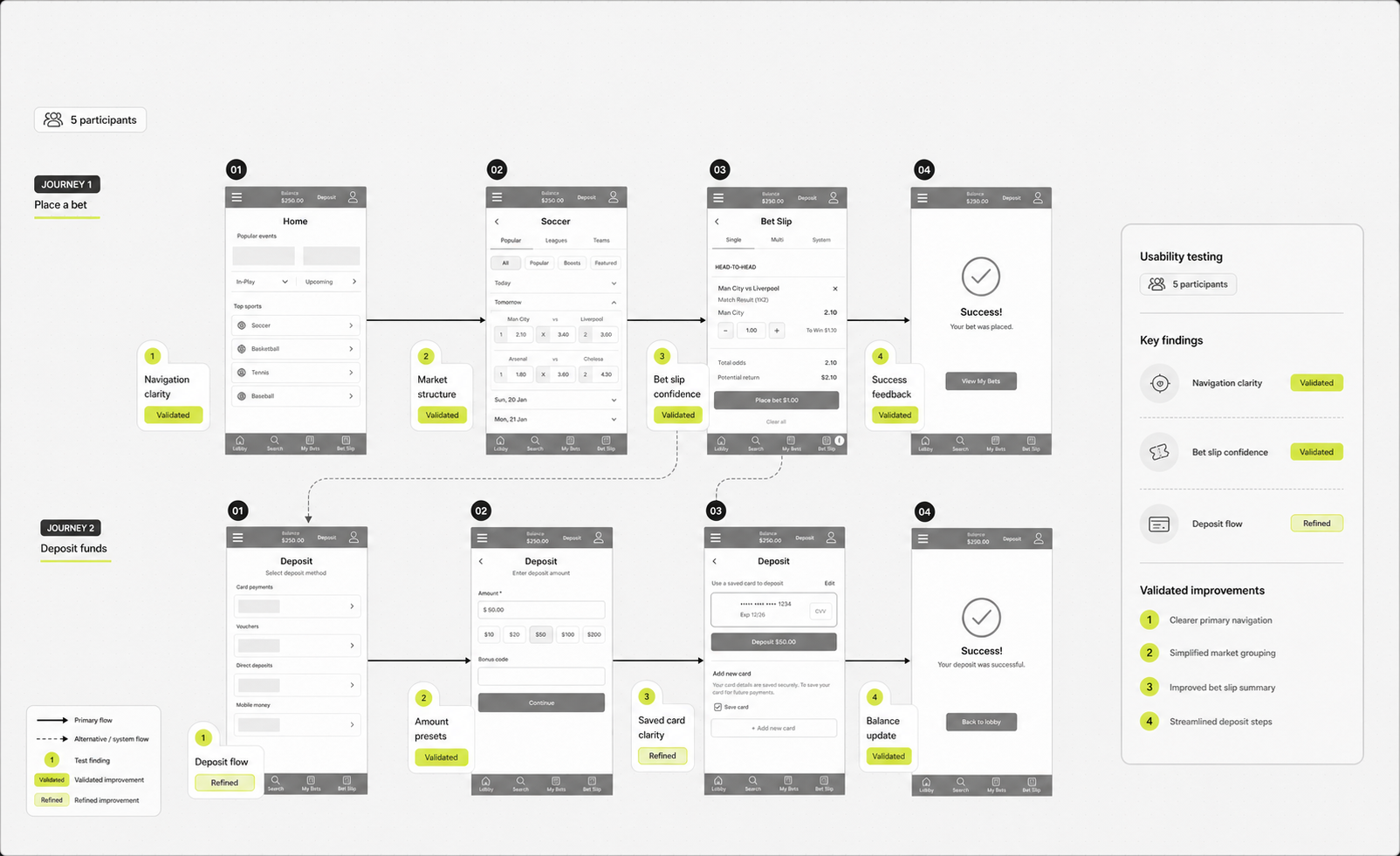
Testing the Core Experience
Before moving into detailed wireframes, I connected the early low-fidelity screens into an interactive prototype and tested the core user journeys. This helped me evaluate the structure, navigation and flow of key tasks, including registration, depositing funds and placing a bet, before investing time in visual detail.
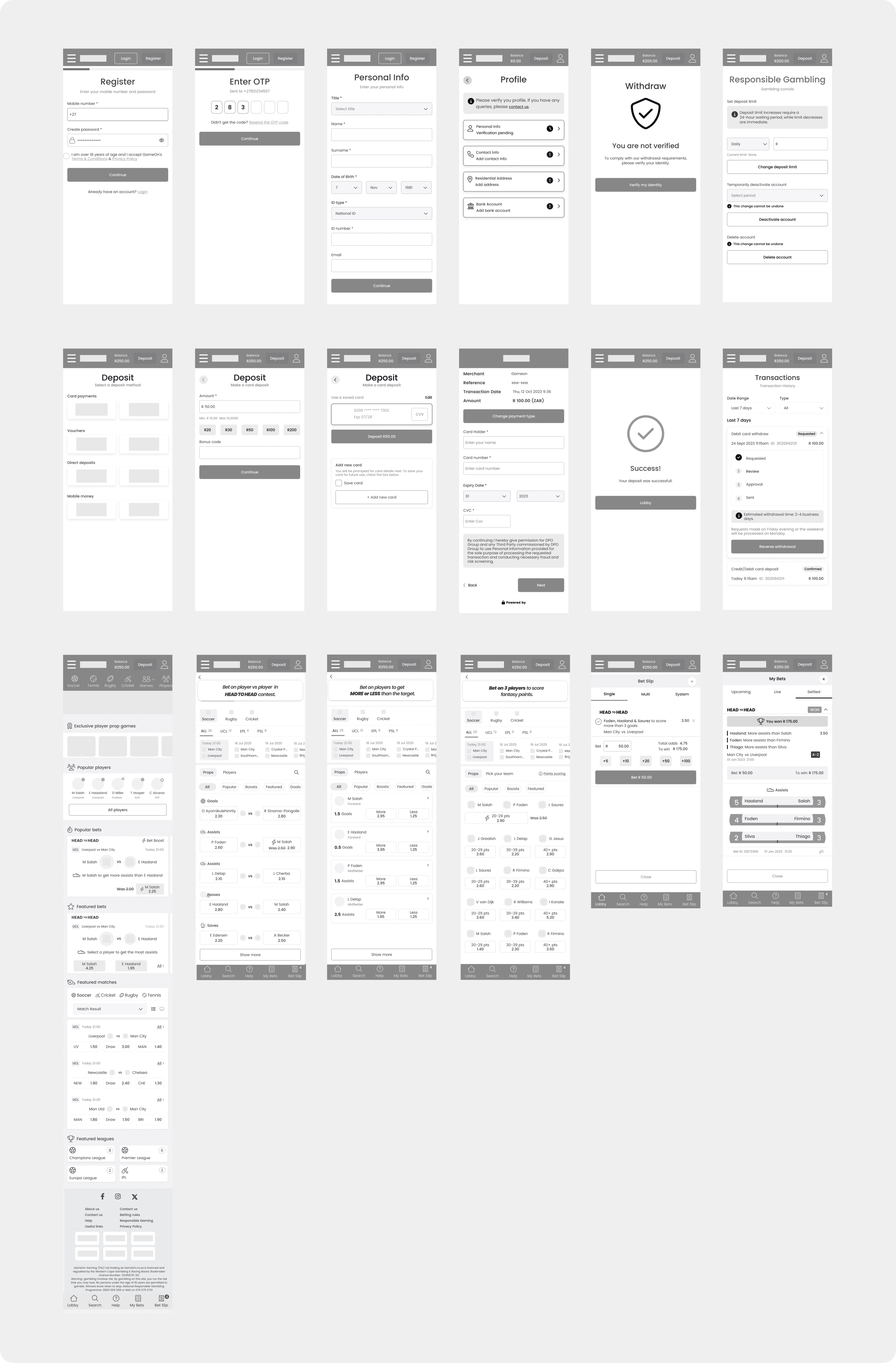
Refining the Experience
With the core journeys tested and the overall direction validated, I translated the findings into more detailed wireframes. Working screen by screen, I refined the information hierarchy, navigation and interactions while resolving the areas of friction identified during testing. These polished wireframes created a clearer foundation for the high-fidelity designs.
Ui Design
With the wireframes validated, I translated the experience into high-fidelity designs in Figma, creating polished, development-ready screens and an interactive prototype for usability testing. This allowed me to validate key user journeys, interactions, and overall usability before development, reducing risk and identifying further opportunities for refinement. Alongside the interface design, I established the web app's visual identity through typography, colour, and reusable UI components aligned with the brand. Given the fast paced nature of a sportsbook, I prioritised clarity, strong visual hierarchy, and simplicity, removing unnecessary clutter so users could focus on placing bets quickly and confidently.
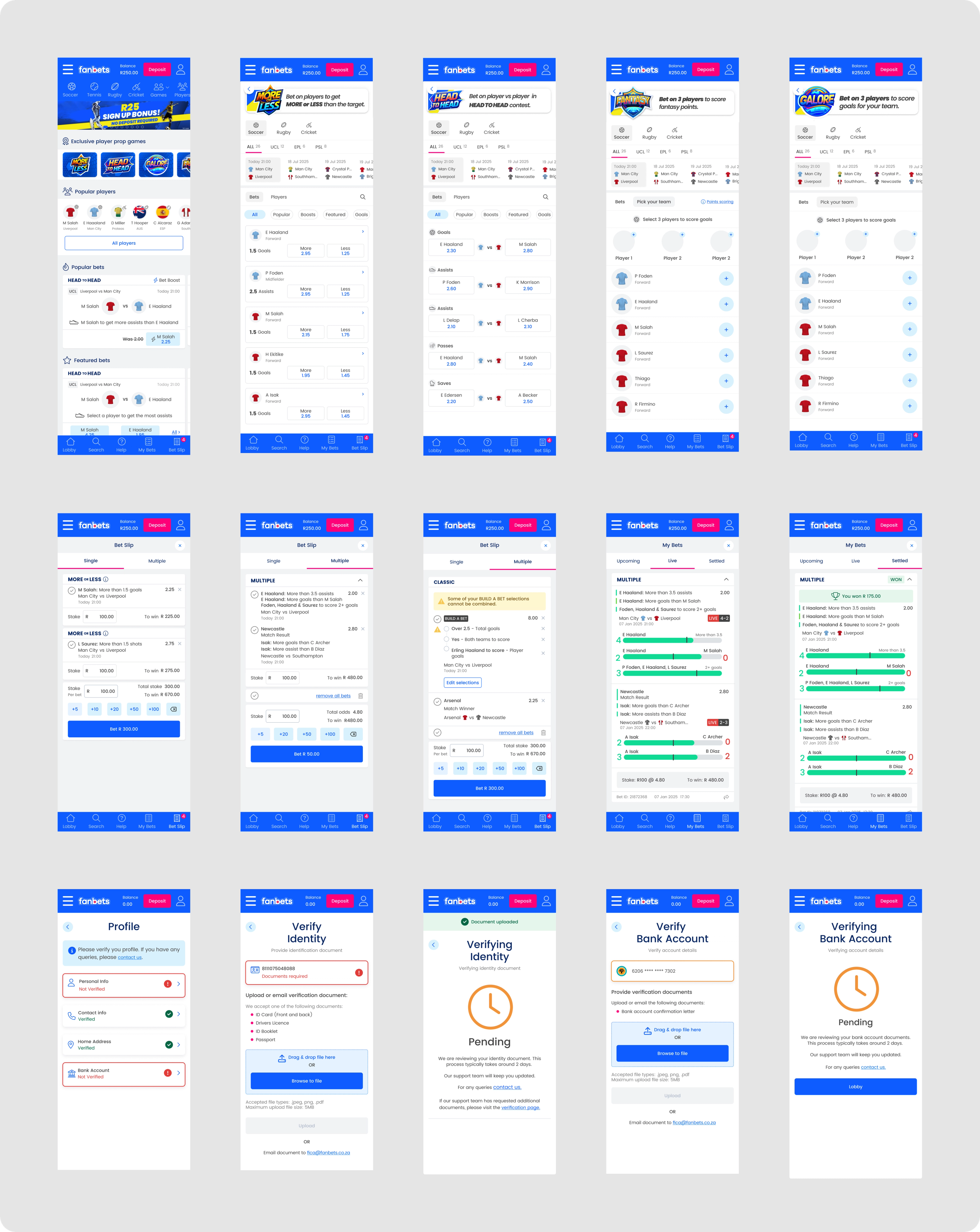
Scaling the Design System Across Operators
To support growth across multiple brands and markets, I created a flexible, multi-operator design system that maintained consistency while allowing each product to have its own identity.
The Challenge
GameOn powers two distinct sportsbook experiences: Fanbets, a real-money betting platform, and SportsBozza, a play-for-fun gaming product. Each serves a different audience and engagement model.
The challenge was to create distinct brand experiences without duplicating design and development effort.
The System
I created a shared foundation of reusable components, design tokens and interaction patterns. Approximately 80% of the system could be reused across both operators, providing a consistent product foundation.
Brand-Level Customisation
Themes, colour tokens, typography and component variants allowed each operator to express its own visual identity and tone while using the same underlying system.
This gave Fanbets and SportsBozza distinct customer-facing experiences without requiring separate component libraries.
Outcomes
- Reduced design-to-development time for new features by 30%
- Improved consistency across products and platforms
- Reduced duplicated design and development effort
- Enabled faster onboarding of new operator brands
- Created a scalable foundation for future expansion
Reflection — Designing Beyond Screens
Designing for multiple operators shifted my approach from designing individual screens to designing interconnected systems. The result was more than a reusable UI library, it became a strategic product asset that allowed GameOn to scale efficiently while delivering distinct experiences for different audiences.
This project reinforced the importance of considering reuse, flexibility and future growth from the beginning. By creating shared foundations instead of isolated solutions, I helped the team move faster without sacrificing consistency or brand identity.